Disaster Risk Management - Preparedness & Response
Disasters can’t always be prevented, but with the right preparation and response, their impact can be reduced. PRCS works with communities across Palau to build resilience and provide timely support when emergencies occur.
The Palau Red Cross Society (PRCS) supports communities across the Republic of Palau before, during, and after disasters. We respond to emergencies such as typhoons, floods, and fires by deploying trained volunteers to conduct rapid assessments and provide immediate relief to affected families.
Our work goes beyond emergency response. PRCS actively partners with communities to identify risks, strengthen preparedness, and reduce the impact of disasters—helping build safer, more resilient communities.
Red Cross Disaster Action Teams (RDATs)
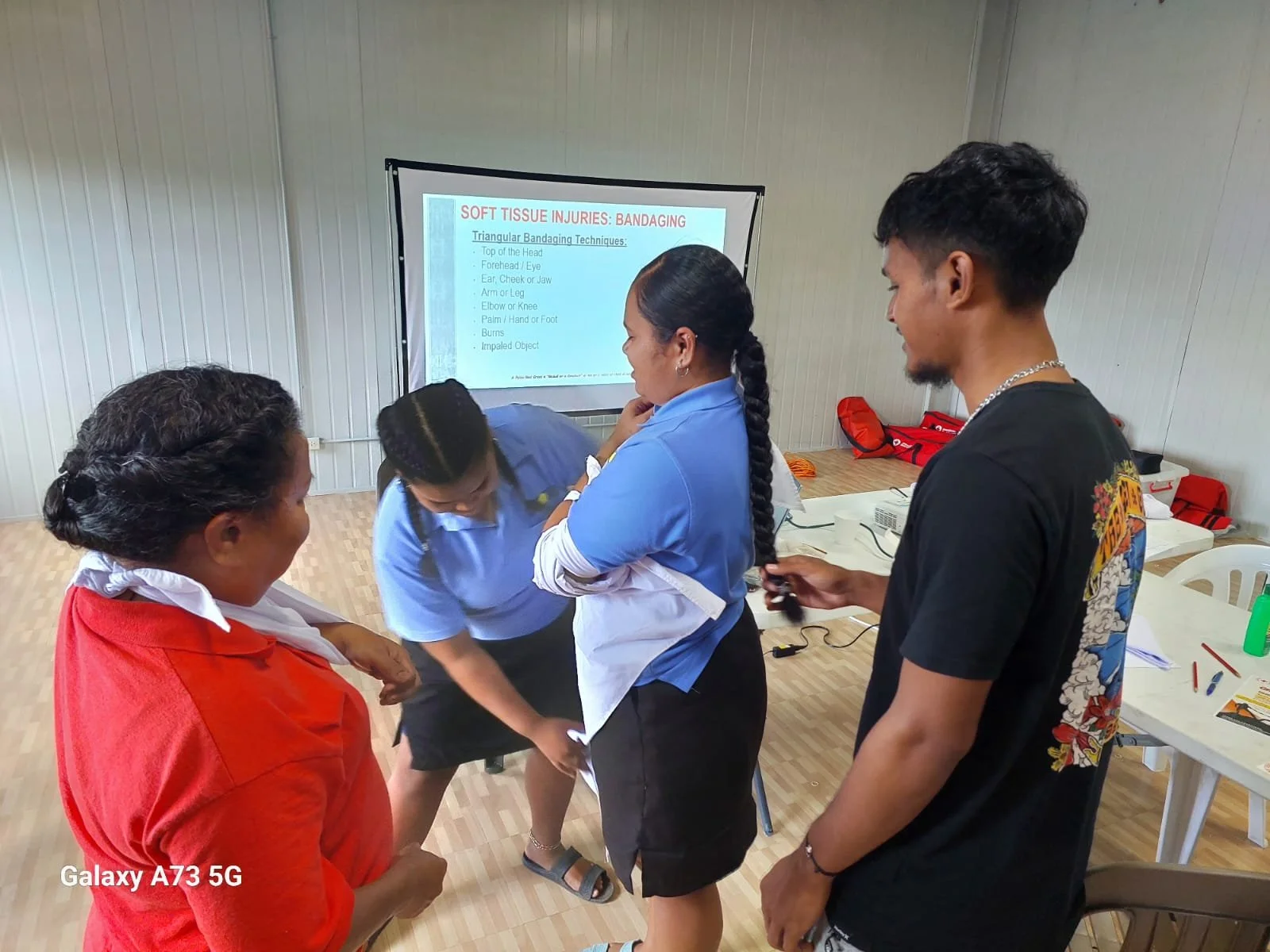
The Red Cross Disaster Action Teams (RDATs) were established in 2018 to strengthen community-level response across all 16 states of Palau. These teams are made up of trained volunteers selected by State Governors, including state workers, members of community groups, and active individuals who are committed to serving their communities.
RDATs are trained by the Palau Red Cross Society (PRCS) in collaboration with key partners such as the National Emergency Management Office (NEMO), the Ministry of Health & Human Services (MHHS), and other relevant agencies. These trainings help build the knowledge and skills needed to support communities before, during, and after emergencies.
Because RDAT members live within the communities they serve, they are often among the first present when disasters occur. Their familiarity with local conditions allows them to respond quickly and provide immediate support at the community level.
RDAT volunteers play an important role in supporting response efforts by helping communities stay informed, organized, and connected during emergencies. Their responsibilities include:
Conducting initial damage and needs assessments
Sharing accurate and timely information
Supporting communication between communities and response agencies
Guiding individuals and families to available services and assistance
RDATs work closely with PRCS and partner agencies to ensure that information from the community is communicated effectively and that assistance is directed where it is most needed. While they are not specialized emergency responders, they serve as a vital link between affected communities and the broader response system.
Through their presence and training, RDAT volunteers help strengthen community resilience and ensure that no community faces a disaster alone.
Role of RDATs
Be Prepared: Build Your Disaster Kit
When a disaster strikes, help may not arrive right away. Roads can be blocked, power may be out, and access to basic supplies can be limited. Having a disaster kit prepared ensures that you and your family can stay safe, comfortable, and self-sufficient during the first critical hours or days.
A well-prepared kit allows you to respond quickly, reduces stress during emergencies, and helps protect the health and safety of your household. Whether facing a typhoon, flood, or fire, being prepared at home is one of the most important steps you can take.
Disaster kits come in all sizes. Build one that best fits your household’s needs and lifestyle.
Basic Essentials
Emergency Tools
Health & Hygiene
Important Items
Additional Needs
What to do, in an Emergency
Watch this video to learn the key steps to take during an emergency and how to keep yourself and your family safe.
Single-Incident Emergency (SIE) Response Program
If your family has been affected by an unexpected emergency, the Palau Red Cross Society is here to help.
The Palau Red Cross Society (PRCS) affirms its mandate to serve as an auxiliary, humanitarian relief organization dedicated to supporting vulnerable populations. One of the ways PRCS fulfills this role is through the Single-Incident Emergency (SIE) Assistance Program.
This program provides immediate and temporary support to households affected by sudden disasters or emergencies. SIEs, by their nature, occur without warning and can have devastating effects on the livelihood of a family. PRCS is committed to responding promptly to each reported case.
Requests for assistance may be received through walk-ins, phone calls, or referrals. Once a case is reported, the PRCS team conducts an assessment with the head of household to determine eligibility. Based on this assessment, appropriate assistance is provided.
Whenever possible, beneficiaries are also linked to other PRCS programs, external services, or family networks for longer-term support and recovery.
→If you or someone you know needs SIE assistance, please contact the Palau Red Cross Society today.